
Most Katy homeowners can tell you exactly when they last replaced the water heater or the HVAC unit. Ask them about the electrical panel and you usually get a shrug. That panel in the garage or the hall closet has been quietly doing its job since the house went up, and nobody thinks about it until someone else does, like an insurance underwriter, a home inspector, or a buyer's agent.
If your home was built before the early 1990s, and plenty of Katy homes were, there is a good chance that someone will eventually ask about it. Three brands in particular get flagged: Federal Pacific Electric, Zinsco, and Challenger. None of them is made anymore, and each one has a reputation that follows a house into every inspection and every insurance conversation.
This isn't a scare piece. It's a look at what these panels are, why they got that reputation, and what it costs when a homeowner waits for someone else to force the issue.
Is one of these hiding behind your panel door?
You can usually find out in under a minute, and you don't need a screwdriver. Walk to the panel (garage, hall closet, or utility room) and look at the outside of the door and the label on its inside face.
| Brand | Typical era in homes | What to look for |
|---|---|---|
| Federal Pacific Electric (Stab-Lok) | 1950s to mid 1980s | Label reading Federal Pacific Electric, Federal Pioneer, or Stab-Lok. Breakers often have a red stripe on the switch. |
| Zinsco (also sold as GTE-Sylvania) | Mid-century through the 1980s | Label reading Zinsco or Sylvania. Breakers may have red, blue or green tabs, though some are black. |
| Challenger | 1980s through the 1990s | The name Challenger stamped on the door handle or printed on the label on the back of the door. |
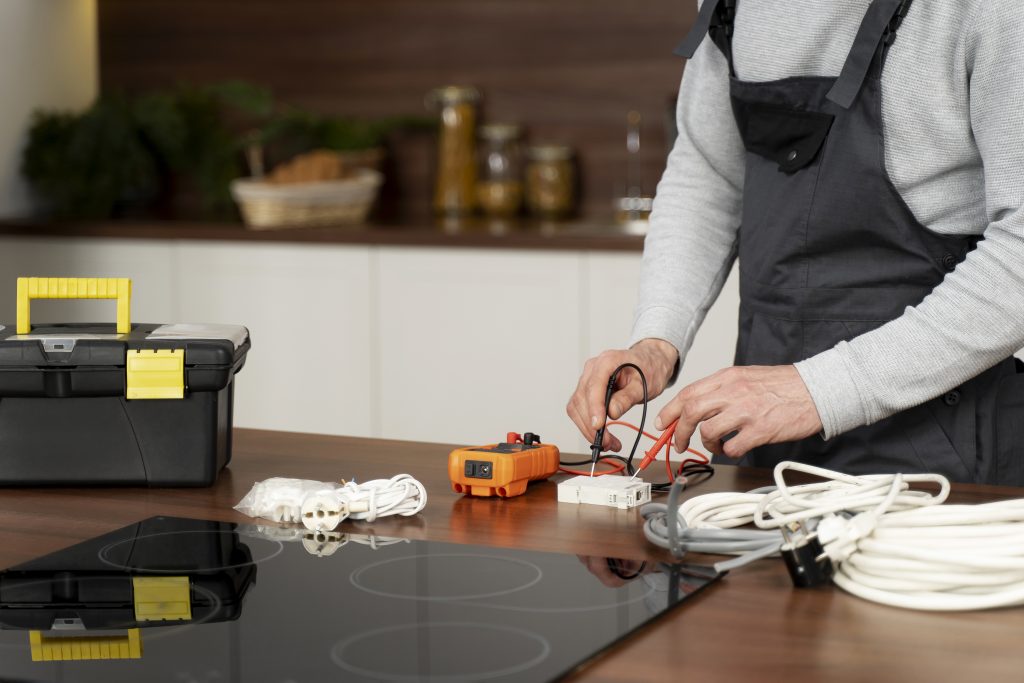
A quick photo of the door and label with your phone works well. If you see one of those names, don't take the inner cover off yourself. That's a job for a licensed electrician, and it's where the real answers are.
Why you can't buy these panels anymore
A breaker has one job: when too much current flows, it trips and shuts the circuit off. The trouble with these three brands comes down to that job not always getting done.
Federal Pacific Electric (Stab-Lok). In 1980, the company's own parent, Reliance Electric, told the Consumer Product Safety Commission about problems with the breakers. Later testing found that some of them, the two-pole breakers especially, could fail to trip when they should. The CPSC closed its investigation in 1983 without ordering a recall, but the reputation stuck. Federal Pacific left the circuit breaker business in 1986, and electricians and insurers have treated Stab-Lok panels with caution ever since.
Zinsco. This one is about how the breaker connects to the panel. Zinsco breakers grip an aluminum bus bar with a clip, and over years of heating and cooling that connection can loosen. A loose connection arcs, the metal wears and corrodes, and in the worst cases the breaker fuses to the bus and can't trip at all. Field reports suggest moisture speeds the process along, which is worth knowing on the humid Gulf Coast. The last Zinsco-style breakers stopped production in 2005.
Challenger. The picture here is more nuanced, and we think you deserve the straight version. Challenger's only formal recall, in 1988, covered one type of 15 and 20 amp ground-fault breaker, not the whole panel. The broader concern comes from what inspectors keep finding in the field: discolored, overheated bus bars. The brand is also tied to the Federal Pacific story, since Challenger reportedly picked up the Federal name and plant in 1986, and it later became part of Eaton's Cutler-Hammer line. No recall of the full panel exists, but that hasn't stopped some insurers from taking a hard look.
The insurance conversation nobody warns you about
Here's where the old panel stops being an electrical question and becomes a money question. Homes with outdated breakers can face higher premiums, a denied application, or a non-renewal, and some insurers have stopped writing policies altogether on homes with certain panels, Challenger among them.
It tends to show up at awkward moments:
- At renewal. Your rate jumps, you start shopping around, and the new company sends someone out. The panel you've lived with for 20 years becomes the reason you can't switch.
- On a new application. Many carriers now ask about the panel brand up front, and some want a photo or a letter from a licensed electrician.
- After a claim. Nobody wants to find out the hard way how an adjuster feels about a panel with a documented history.
In a market like ours, where Houston-area homeowners already deal with storm-season rate pressure, a panel that hands an underwriter an easy reason to say no is a risk you can take off the table. Every company handles this differently, so a quick call to your agent is worth making. Just ask whether they have any requirements for Federal Pacific, Zinsco, or Challenger panels.
What it looks like when you sell
Katy homes move, and the inspection is where an old panel shows its hand. A buyer's inspector will open that door, and these three names are on every inspector's short list.
In Texas, that inspection usually happens during the option period, a short window when the buyer can renegotiate or walk away. Suddenly a panel you never thought about is a line item on a report, with a deadline attached. The buyer asks for a repair, a credit, or a lower price. Their insurance company may weigh in too, and a quote that comes back with strings attached can slow down or stall a closing.
The same replacement that is a calm, scheduled project today becomes a rushed one on the buyer's timeline, with the buyer's leverage. Sellers who handle it ahead of time list a home with one fewer thing to negotiate.
The cost of waiting
Here's the part that surprises people. For most homeowners, the question was never whether the panel gets replaced, only who picks the day. Waiting rarely makes the job cheaper or smaller. It just hands the decision to someone else.
| You schedule it | It gets forced on you | |
|---|---|---|
| Timing | A weekday that works for your family | A deadline set by an insurer, a lender, or a buyer |
| Choices | Time to compare options and ask questions | Whatever can happen fastest |
| Insurance | You keep the policy you have, or shop from a stronger position | A decline, a surcharge, or a replace-by date |
| Selling | A clean inspection report | A negotiation where the buyer holds the leverage |
There's also the simple matter of knowing. A panel with this history is a question mark every day it stays in your wall, and a visit from a licensed electrician turns that question mark into an answer, whatever the answer turns out to be.
Let Eric and the team take a look
If you spotted Federal Pacific, Zinsco, or Challenger on your panel door, or you aren't sure what you have, we'd be glad to come out and see for ourselves. Eric and the GoldStar Electric crew work in Katy every day, and a lot of what we see in older homes around town starts with a panel that was fine when it went in and hasn't been looked at since.
A visit is simple. We check what you have, tell you plainly whether it needs attention, and explain your options with no pressure. If it's fine, you'll know. If it isn't, you'll have a plan and a timeline you chose.
Give us a call or book online, and let's get your panel checked before somebody else puts you on a deadline.
P.S. If a panel replacement turns out to be the answer, ask about our coupon: $200 off a 200-amp panel installation. You can find it on our coupons page.